That first client is the hardest one, by far. Every freelancer I’ve ever talked to remembers exactly how nerve-wracking it was figuring out how to get freelancing clients when they had no portfolio, no reviews, and no proof they could actually deliver. Let’s fix that specific problem.
Why the First Client Feels So Hard
Quick answer: Landing your first freelancing client is difficult mainly because you’re asking someone to trust you without evidence — no reviews, no portfolio, no past client to vouch for you — which is why the first client almost always requires a different strategy than the tenth.
Once you understand that, the strategy becomes clearer: reduce the risk for that first person as much as possible.
Start With Your Existing Network
This feels obvious, and yet a lot of new freelancers skip straight to cold outreach on freelancing platforms, ignoring the people who already know and trust them.
- Post on your personal social media that you’re offering the service
- Message people directly who might need it or know someone who does
- Offer a small discount or bonus for your first few clients in exchange for a genuine testimonial
I’ve watched several freelancers land their first paying client within a week just by posting clearly about their new service to their existing circle, something they’d been oddly hesitant to do.
Do Free or Discounted Work Strategically
This is a bit controversial in freelancing circles, but I think it’s often misunderstood. Doing one or two free or heavily discounted projects isn’t about undervaluing yourself forever — it’s about building the initial proof you genuinely lack.
- Offer a discounted rate for your first 2-3 clients, clearly framed as an introductory offer
- In exchange, ask explicitly for a detailed testimonial and permission to use the work in your portfolio
- Set a clear boundary — this is a limited-time strategy, not your ongoing pricing
Build a Small, Focused Portfolio First
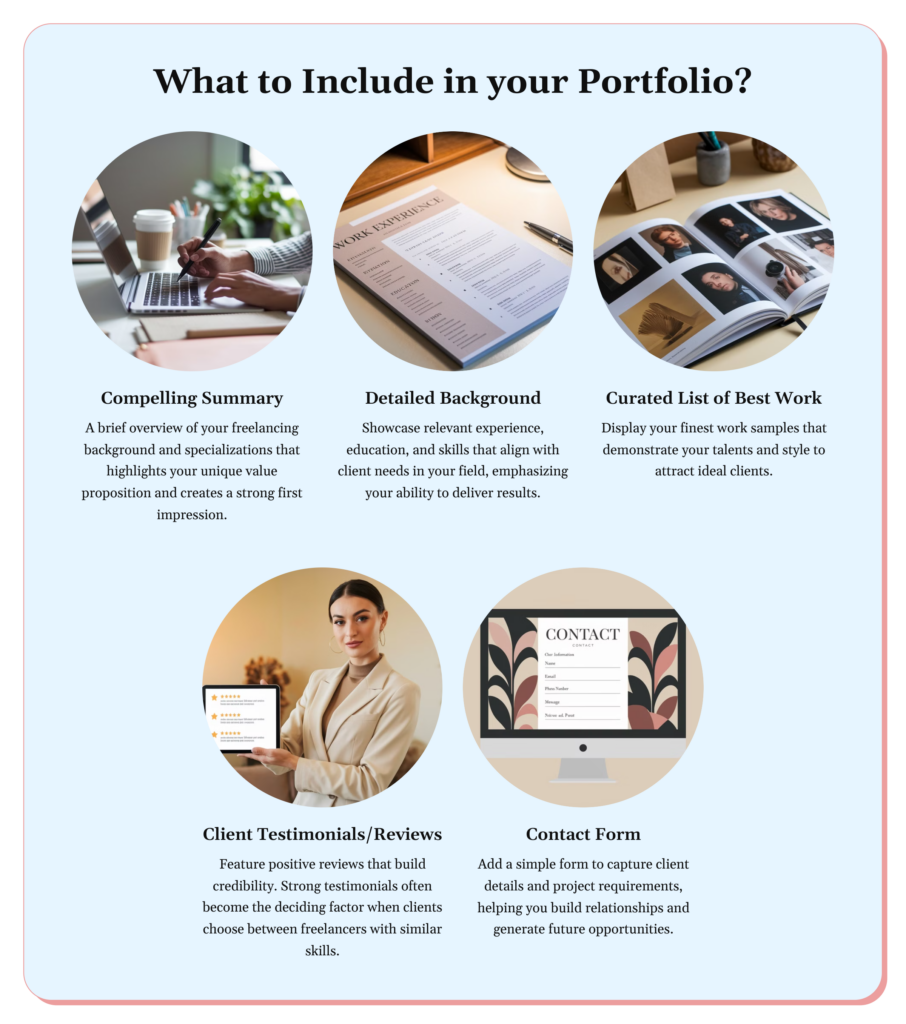
Even without paid clients yet, you can create sample work that demonstrates your skill. A designer can create mock projects. A writer can write sample articles on topics relevant to their target niche.
This isn’t the same as real client work, but it gives prospective clients something concrete to evaluate rather than just your word.
Use Freelancing Platforms Strategically
Platforms like Upwork, Fiverr, and Freelancer can work, but new freelancers often approach them wrong.
- Write a proposal specific to that exact job, not a generic copy-pasted pitch
- Address the client’s specific problem in the first two lines, not your general credentials
- Consider slightly lower introductory pricing to win your first few reviews, then raise rates once established
- Complete your profile fully — an incomplete profile signals inexperience before a client even reads your pitch
Cold Outreach Done Properly
Cold outreach gets a bad reputation because most of it is done badly — generic, obviously mass-sent messages that scream low effort.
A better approach: research the specific business, mention something specific about their current situation, and offer a clear, small first step rather than a big commitment.
Picture reaching out to a local bakery in Jaipur saying “I noticed your Instagram hasn’t posted in three weeks — I help small food businesses stay consistent with content, want me to draft one week of posts for free so you can see the difference?” That’s specific, low-risk, and hard to ignore compared to a generic “I offer social media services, interested?”
Leverage Local Business Communities
Local Facebook groups, WhatsApp business communities, and small business meetups often have people actively looking for exactly the service you offer, with far less competition than crowded global freelancing platforms.
Ask Every Client for Referrals
Once you’ve delivered good work for even one client, ask directly: “do you know anyone else who might need this?” This single habit, done consistently, becomes one of the strongest ongoing client sources for established freelancers.
FAQ
How long does it typically take to land the first freelancing client? It varies, but with consistent outreach, most freelancers land their first client within 2-4 weeks, sometimes faster through their existing network.
Should I work for free to get my first client? A limited, clearly framed discounted or free project can work well to build initial proof, but it shouldn’t become an ongoing pattern once you have some testimonials.
Which freelancing platform is best for beginners? Fiverr tends to be more beginner-friendly for building initial reviews quickly; Upwork often suits more experienced freelancers pitching for higher-value projects.
How do I price my services with no experience yet? Start slightly below market rate as an introductory offer, then increase your pricing once you’ve built a small base of reviews and a stronger portfolio.
Is cold outreach still effective for freelancers? Yes, when it’s specific and personalized to the potential client’s actual situation, rather than a generic, obviously mass-sent message.
What’s the fastest way to build trust with a first-time client? Being specific about how you’ll solve their exact problem, offering a small low-risk first step, and following through reliably on whatever you commit to.
Conclusion
Figuring out how to get freelancing clients for the first time comes down to reducing risk for that first person willing to take a chance on you — through your existing network, strategic discounted work, or specific, low-pressure cold outreach. Once you land that first client and deliver well, referrals and testimonials genuinely start doing a lot of the work for you. Send three specific outreach messages today, even if it feels uncomfortable — that discomfort fades fast once the first “yes” comes in. [link to related guide about the most in-demand freelancing skills here]
Suggested Alt Text:
- “Freelancer sending outreach messages to potential clients on laptop”
- “New freelancer building a portfolio with sample work”
- “Freelancer receiving a positive client testimonial message”