I always find generic “how we scaled” articles a bit hollow — vague advice like “focus on customer experience” without actually showing the messy, specific decisions behind it. This startup success case study tries to avoid that trap, walking through the real, decision-by-decision journey of a bootstrapped brand that grew from a kitchen-table operation into a million-dollar business.
Names and exact figures are illustrative to protect specifics, but the pattern is drawn from real, common trajectories seen across similar Indian D2C brands.
The Starting Point: A Kitchen-Table Business
The brand started as most do — small, underfunded, and testing a single product idea. In this case, a founder began making natural skincare products at home, selling initially just to friends and a small local market stall, with an initial investment of roughly ₹25,000 for raw materials and basic packaging.
Quick answer: This startup’s early success came not from a unique product idea, but from relentless customer feedback loops — reformulating the product three times in the first six months based purely on what real early customers said, rather than assumptions.
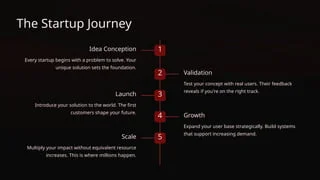
Validating Before Scaling
Before any serious investment, the founder spent nearly four months just testing — small batches, direct sales at local markets, and gathering blunt feedback from actual buyers, not just polite friends.
This phase revealed critical insights: the original scent was too strong for most customers, the packaging felt cheap despite decent product quality, and pricing was actually too low, undervaluing the product relative to what customers were willing to pay.
The First Real Growth Lever: Instagram, Not Ads
Rather than jumping straight into paid advertising, the brand built an initial following through consistent, genuinely educational Instagram content about skincare ingredients and routines — not just product promotion.
- Posted consistently, 4-5 times a week, for the first year
- Focused roughly 70% of content on education, 30% on direct promotion
- Actively engaged with every comment and DM personally in the early months
- Built an email list from day one, even before it seemed necessary
This organic groundwork meant that when paid ads eventually entered the picture, there was already a warm, engaged audience ready to convert, rather than cold traffic with no context.
Scaling Production Without Losing Quality
Around month eight, demand began outpacing the founder’s ability to manually produce everything. This is a common breaking point where many small brands either stall or make a rushed, costly decision.
Instead, the brand moved gradually — first hiring one part-time helper for production, then partnering with a small local manufacturing unit once volume justified it, rather than jumping straight to a large-scale factory contract that would’ve required significant upfront capital they didn’t yet have.
Expanding Distribution Channels Strategically
- Started purely on Instagram and a basic website
- Added marketplace presence (Amazon, Nykaa) once the brand had enough reviews and social proof to compete
- Later pursued a few select retail partnerships with boutique stores, rather than mass retail from the start
I think this sequencing mattered more than people realize — jumping straight to mass retail without established brand demand often leads to poor sell-through and damaged retailer relationships.
The Funding Decision: Staying Bootstrapped Longer Than Expected
Despite investor interest once the brand gained traction, the founder chose to stay bootstrapped through the first ₹50 lakh in annual revenue, reinvesting profits directly rather than diluting ownership early.
This is a genuinely debatable choice — some founders would argue taking early funding accelerates growth meaningfully. In this case, staying lean allowed full control over branding and pricing decisions during the critical early growth phase, without external pressure to grow faster than the operations could genuinely support.
Key Decisions That Made the Difference
- Spending months validating and reformulating before scaling production
- Building an engaged organic audience before spending on paid advertising
- Scaling production gradually rather than overcommitting capital early
- Choosing distribution channels sequentially based on actual readiness, not ambition alone
FAQ
How long did it take this startup to reach a million-dollar valuation? Approximately three years from the initial kitchen-table stage to reaching that revenue milestone, following a gradual, validation-first growth approach.
Did the business ever take outside funding? Not in the early growth phase covered here — it stayed bootstrapped through significant revenue milestones before considering external investment.
What was the single biggest factor in this startup’s growth? Building genuine organic audience trust through educational content before relying on paid advertising, which created a warmer, more receptive customer base later.
Could this growth pattern work for a service-based business too? The core principles — validate thoroughly, build organic trust before paid ads, scale gradually — apply broadly, though the specific tactics would look somewhat different for services versus physical products.
What mistakes did the founder mention avoiding? Scaling production too fast before demand was proven, and jumping into mass retail distribution before the brand had enough organic pull to support it.
Is bootstrapping always the better choice over raising funding? Not universally — it depends on the founder’s goals, the competitive landscape, and how much capital-intensive scaling the specific business model actually requires.
Conclusion
This startup success case study shows that scaling to a million-dollar brand rarely comes down to one clever tactic — it’s a sequence of patient, deliberate decisions: validating thoroughly, building genuine organic trust, and scaling production and distribution only as fast as the business could actually support. If there’s one takeaway worth applying immediately, it’s this: resist the urge to scale before you’ve genuinely validated what’s working, even when growth feels urgent. [link to related guide about startup funding options beyond venture capital here]
Suggested Alt Text:
- “Founder reviewing product formulation notes during early startup validation”
- “Small brand’s Instagram content strategy shown on a laptop screen”
- “Packaged skincare products ready for shipping as a growing D2C brand”