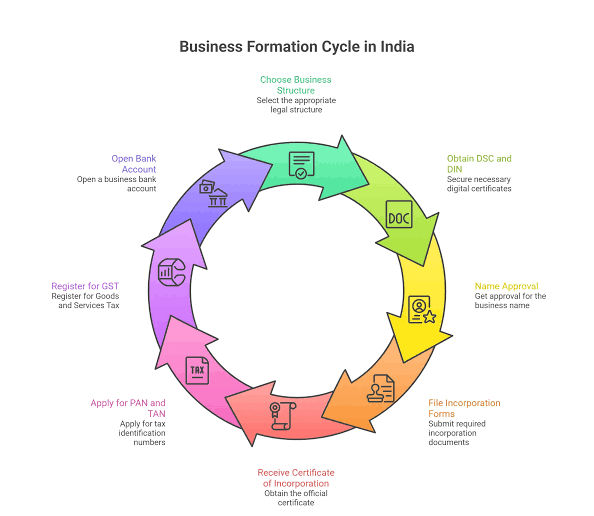
Every second person I talk to who’s starting out has the same question: “Do I actually need to register my business, or can I just start selling?” Fair question. The business registration process in India can feel like a maze if nobody’s walked you through it before.
Let’s fix that. This isn’t legal advice from a lawyer, but it’s a practical walkthrough of how the process actually works on the ground.
Do You Even Need to Register?
Quick answer: If you’re testing an idea with a friend as a customer, you probably don’t need to register yet. Once you’re taking regular payments, hiring people, or want a business bank account, registration becomes necessary — both legally and practically.
Small freelancers sometimes delay this longer than they should, mostly out of confusion, not laziness.
Choose the Right Business Structure First
This is where most people get stuck, and honestly it’s the step worth spending the most time on.
Common structures in India:
- Sole Proprietorship — simplest, minimal paperwork, but no separation between you and the business legally
- Partnership Firm — for two or more owners, based on a partnership deed
- Limited Liability Partnership (LLP) — separates personal and business liability, popular with service firms
- Private Limited Company — best if you’re planning to raise funding or scale significantly
- One Person Company (OPC) — good middle ground for solo founders wanting limited liability
I’ll be honest — I usually nudge first-time founders toward sole proprietorship or LLP unless they already know they’re chasing venture funding. Pvt Ltd sounds impressive, but it comes with more compliance than most early-stage founders are ready to handle.
Step 1: Get a PAN and Digital Signature Certificate (DSC)
The business registration process formally begins with your documents in order. You’ll need:
- PAN card (yours, and the business’s if it’s a company)
- Digital Signature Certificate for the proposed directors (for company/LLP registration)
- Director Identification Number (DIN), if forming a company
This part is mostly online now through the MCA (Ministry of Corporate Affairs) portal, which has genuinely gotten faster over the last couple of years.
Step 2: Reserve Your Business Name
You’ll submit 2-3 name options through the RUN (Reserve Unique Name) service on the MCA portal. Names get rejected surprisingly often for being too similar to existing trademarks or companies — plan for at least one rejection round.
Step 3: File Incorporation Documents
For companies and LLPs, this means filing the SPICe+ form (yes, that’s really the name) along with:
- Memorandum of Association (MOA)
- Articles of Association (AOA)
- Proof of registered office address
- Identity and address proof of directors/partners
For a sole proprietorship, this step is much lighter — you might just need a Shop and Establishment license or GST registration depending on your state and business type.
Step 4: Apply for GST Registration
GST registration is technically separate from business registration but almost always needed alongside it if your turnover crosses ₹20 lakh (₹10 lakh in some special category states) or if you’re selling online.
A quick reality check: most e-commerce platforms won’t let you sell without a GST number, regardless of your turnover. So plan for this early if you’re going the online-selling route.
Step 5: Open a Business Bank Account
Once you have your registration certificate and PAN, opening a current account is usually straightforward. Banks typically ask for:
- Certificate of Incorporation or registration proof
- PAN of the business
- Address proof of the business
- ID proof of the authorized signatory
Common Mistakes to Avoid
I’ve seen these trip up first-timers again and again:
- Choosing Pvt Ltd when a sole proprietorship would’ve been far simpler
- Forgetting annual compliance filings once registered (this catches people off guard a year later)
- Registering the business name without checking trademark conflicts first
- Delaying GST registration until it becomes urgent, then rushing it
FAQ
How long does business registration take in India? A sole proprietorship can be set up in a few days. LLP or Pvt Ltd registration typically takes 10-15 working days if documents are in order.
What’s the cost of registering a private limited company? It varies by state and professional fees, but government fees alone are usually a few thousand rupees, with total costs (including CA/CS fees) often running higher.
Can I register a business from home? Yes, your home address can serve as the registered office for most structures, including Pvt Ltd companies, as long as you have address proof.
Is GST registration mandatory for every business? No, only if your turnover crosses the threshold, or you sell through e-commerce platforms, or operate across state lines in certain cases.
What documents do I need as a sole proprietor? Usually just your PAN, Aadhaar, address proof, and depending on your state, a Shop and Establishment registration or GST number.
Can I change my business structure later? Yes, it’s fairly common to start as a sole proprietorship and convert to an LLP or Pvt Ltd once the business grows. It involves its own paperwork but isn’t rare at all.
Conclusion
The business registration process looks intimidating from the outside, but broken into steps, it’s manageable even without a lawyer holding your hand the whole way. Pick the right structure for where you actually are right now, not where you hope to be in five years. Get your PAN and documents sorted, register, and get that GST number if you need it. If you’re still unsure which structure fits, a quick consult with a CA before you file saves a lot of headache later. [link to related guide about small business loans here]